How a Seamless Clover Patterns 5 Pack Can Refresh Your Creative Projects Without Extra Effort
Finding a pattern that carries symbolic weight and still works across multiple formats is harder than it sounds. The four-leaf clover sits in a strange creative space. It is immediately recognizable, loaded with positive connotations, and yet genuinely underused in contemporary surface design. A Seamless Clover Patterns 5 Pack changes that equation. Instead of settling for a single flattened graphic or a clip-art style icon that refuses to tile cleanly, you get five distinct interpretations built for real-world use. The result shifts from decoration to a functional asset that works across fabric, paper, digital backgrounds, packaging, and branded merchandise.
What makes a pack like this worth paying attention to now has less to do with seasonal luck-themed marketing and more to do with a broader shift toward nature-inspired visuals that carry a subtle narrative. Consumers and audiences respond to symbols that feel personal without feeling forced. Clovers, especially when rendered with botanical accuracy or stylized restraint, occupy that niche perfectly.
What Exactly Is a Seamless Clover Patterns 5 Pack
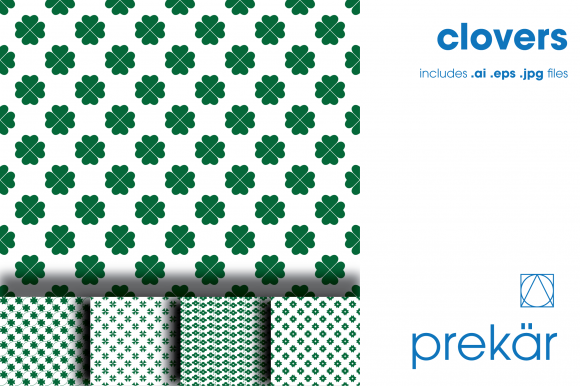
At its simplest, it is a curated collection of five repeating clover-themed surface designs. The term seamless matters here more than casual buyers might realize. A seamless pattern tiles infinitely without visible edges, breaks, or awkward cut-off points. For anyone who has tried to scale a static image across a large canvas only to discover harsh grid lines, the difference is night and day.
These packs typically include variations in density, scale, color treatment, and botanical style. One pattern might feature delicate line-drawn clovers scattered on a light ground. Another could lean into a dense, vintage-inspired motif with deeper greens and cream accents. A third might abstract the clover shape into geometric near-repeats that read as texture from a distance and reveal detail up close. The range within five designs gives users flexibility without overwhelm.
The file formats usually span raster and vector options. High-resolution JPEGs or PNGs handle quick digital applications. Vector formats like AI, EPS, or SVG allow infinite scaling for print production, large-format signage, or product customization. For someone running a small business, managing a brand identity, or creating content regularly, having both options eliminates a frustrating step in the workflow.
Why Nature-Based Motifs Keep Gaining Ground in Visual Culture
Botanical patterns never fully disappear, but their current prominence reflects something specific about the moment. The past several years have reshaped how people relate to indoor spaces, personal objects, and screen-based media. As more life happens at home, the textures and symbols people surround themselves with take on added significance. Leaves, florals, herbs, and clovers appear on everything from phone cases to throw pillows not just because they look pleasant, but because they suggest growth, resilience, and connectedness.
Clovers carry an extra layer. Beyond the obvious luck association, they connect to ideas of rarity, discovery, and quiet optimism. Using a Seamless Clover Patterns 5 Pack lets creators tap into that emotional undercurrent without scripting it explicitly. Someone browsing a product listing or scrolling through a feed may not consciously register the four-leaf motif, but the subtle positivity registers. That is the kind of design advantage that compounds over time.
The Shift Away From Minimalist Sterility
Clean white backgrounds and ultra-minimal layouts still have their place. What is changing is the appetite for warmth, texture, and detail within otherwise restrained designs. A clover pattern works well here because it can be detailed without being chaotic. A tightly repeating small-scale clover reads as a sophisticated neutral from a step back. That balance lets designers add character without overwhelming other elements on the page or product.
Who Actually Uses These Pattern Packs Day to Day
The audience for a Seamless Clover Patterns 5 Pack is broader than surface pattern designers alone. Several distinct groups find practical value in having ready-to-use seamless patterns available immediately.
- Small product sellers and Etsy shop owners use them for packaging inserts, thank-you cards, fabric labels, and product photography backdrops. A consistent pattern across touchpoints builds a subtle brand cohesion that customers notice.
- Stationery designers and wedding professionals apply clover motifs to invitation suites, place cards, envelope liners, and day-of paper goods, especially for spring events, garden parties, or Irish heritage celebrations.
- Content creators and social media managers layer patterns into quote graphics, story backgrounds, Pinterest pins, and newsletter headers. The visual interest increases engagement without requiring custom illustration work each time.
- Fabric and textile hobbyists use seamless repeats for print-on-demand services, custom apparel, quilting prints, and embroidery pattern fills through services like Spoonflower or print-on-demand storefronts.
- Brand designers and marketing professionals incorporate pattern elements into brand collateral, event materials, or seasonal campaigns where a botanical touch aligns with the message.
The common thread across all these use cases is the need for speed without sacrificing polish. Anyone who has spent an evening trying to manually tile a graphic in Canva or Photoshop knows that seamless patterns solve a real pain point. Owning a pack means the heavy lifting is done.
Practical Advantages of a Five-Pattern Collection Over Single Designs
One pattern can do a lot. Five patterns open up possibilities for visual systems. This is where the value of a pack structure becomes clear. With multiple coordinated designs, a creator can assign different patterns to different contexts while maintaining a cohesive look. The denser pattern might work as a website section divider. The airier version becomes a social media template background. The line-art style translates well to one-color applications like foil stamping or screen printing.
There is also a practical testing benefit. Not every pattern works on every substrate. A design that looks stunning on screen might lose detail when printed on textured paper or scaled down for a phone case. Having options within the same thematic family means a user can experiment quickly without purchasing additional assets. If the tight repeat does not read well on the cotton tote, the larger-scale option probably will.
Licensing Considerations That Affect Real-World Use
Most commercially sold pattern packs come with licenses that permit use on physical products, digital designs, and client work. The specific terms vary, so reading the license before purchasing matters. Packs that allow commercial use without requiring additional royalties give small businesses the most freedom. Some may restrict reselling the pattern files themselves or using them as the primary design on print-on-demand products in competitive categories. These limitations are standard across the digital asset industry, and informed buyers account for them when planning their product lines.
How the Digital Asset Market Has Matured
The conversation around digital design assets has shifted considerably. Even five years ago, many professionals hesitated to use pre-made elements in client-facing work. Concerns about originality, quality, and overuse were valid. Today those perceptions have softened and matured. The volume of high-quality work available from independent surface designers, illustrators, and pattern studios has raised the baseline. A well-crafted seamless clover pattern from a reputable source looks nothing like the generic stock graphics that once gave pre-made assets a bad name.
What changed is the recognition that execution and context determine perception. A pattern is a raw material. How it gets applied, scaled, paired with typography, and integrated into a larger design system determines whether it feels custom or off-the-shelf. Smart creators treat a Seamless Clover Patterns 5 Pack the way a chef treats a quality ingredient. The starting point is not the whole story.
St. Patrick's Day Is Only One Sliver of the Story
Many people first encounter clover imagery in March, tied to holiday promotions and themed merchandise. Limiting clover patterns to that single window misses their broader applicability. Spring product lines, garden center branding, natural wellness packaging, outdoor wedding stationery, and botanical home décor collections can incorporate clover motifs across months of the year. The color palette expands the range further. Soft sage greens, muted teals, dusty creams, and even metallic gold variations push clovers beyond holiday kitsch into year-round usefulness.
A dark background version with copper-toned clovers reads autumnal and sophisticated. A watercolor wash in pastel greens suits baby showers and spring catalogs. The symbolism of luck, fortune, and positive outcomes also makes clover patterns suitable for financial planning visuals, coaching materials, and goal-setting journals. The application list stretches much further than initial assumptions suggest.
What to Look for When Evaluating a Pattern Pack
Not all seamless pattern packs deliver the same experience. A few evaluation criteria help separate collections that will get used repeatedly from those that sit unused in a downloads folder.
- True seamlessness at the edges: Test the tile at various scales. Obvious repeating artifacts or awkward clustering around the tile boundaries signal rushed work.
- Appropriate resolution and format variety: Vector formats matter for anything destined for print. Raster files at 300 DPI minimum handle digital and small-format print needs. Packs offering both show an understanding of cross-platform workflows.
- Distinct variation within the set: Five patterns that look nearly identical defeat the purpose. Look for meaningful differences in scale, density, color treatment, and stylistic approach.
- Color editability: Patterns delivered as layered or editable vector files let users recolor to match brand palettes. Flat raster-only packs limit creative control.
- Clear licensing documentation: The best sellers state explicitly what is allowed, what requires extended licensing, and what falls outside permitted use.
Integrating Patterns Into an Existing Creative Workflow
For someone new to working with seamless patterns, the learning curve is mercifully short. Most design software handles pattern files intuitively. In Photoshop, a pattern can be defined as a fill layer and applied with a single click. In Illustrator, pattern swatches appear in the swatches panel and apply to any shape. Canva allows seamless uploads that tile automatically across backgrounds. Even presentation software like PowerPoint or Google Slides accepts pattern images as slide backgrounds.
The practical recommendation is to spend a short session importing the pack, testing each pattern at different scales, and saving the most useful configurations as presets. That upfront investment of fifteen minutes saves repeated adjustment down the line. For product photography, loading the patterns onto a tablet or secondary screen creates an instant styled backdrop without printing anything physical.
Why Creators Are Building Visual Asset Libraries Instead of Starting From Scratch
The volume of output expected from modern creators, marketers, and small business owners keeps climbing. A social media manager might need thirty distinct graphics per week. A product seller juggles listing images, promotional banners, email headers, and packaging mockups. Starting every visual from a blank canvas is rarely sustainable. Building a personal library of go-to patterns, textures, and templates changes the production math considerably.
A Seamless Clover Patterns 5 Pack earns its place in that library when it fills a specific aesthetic gap that comes up repeatedly. The clover niche sits at the intersection of botanical, symbolic, and classic, making it applicable across industries that share those visual touchpoints. Once the files are downloaded and organized, they become part of a reusable system that compounds in value over time.
The broader trend toward asset libraries also reflects a maturing understanding of creative work. Designing everything from scratch is not inherently more virtuous than designing efficiently. The skill lies in selection, adaptation, and combination. A thoughtfully chosen pattern applied with intention reads as intentional design. No audience member sees the pattern file and thinks about whether it was hand-drawn for that specific project or sourced from a curated collection. They experience the finished piece holistically, which is the entire point.
Examples of Realistic Pattern Applications
Concrete examples ground the conversation. Imagine a small-batch candle maker preparing for a spring collection launch. The product labels need a botanical element that feels fresh but not floral-overload. A subtle clover repeat in muted sage becomes the label background. The same pattern, scaled up and lightened, appears on the tissue paper used for gift wrapping. The website banner pulls a detail crop of the densest pattern from the pack. The result looks like a coordinated brand rollout, not a piecemeal scramble.
Consider a freelance educator developing a digital course workbook. The cover and section dividers benefit from a nature-inspired motif that suggests growth without literal plant photography. One of the lighter clover patterns serves as a background for pull quotes and key takeaway boxes. Students probably will not identify the pattern consciously, but the material feels more considered than a plain-text PDF. That perceived quality affects completion rates and word-of-mouth recommendations.
A blogger writing about personal finance might use a stylized clover pattern as a recurring visual motif across Pinterest pins and newsletter templates. The luck and prosperity symbolism reinforces the content theme without requiring literal images of coins or piggy banks. Month after month, the pattern becomes a recognizable part of the visual brand.
These examples share a common thread. The pattern is not the message. It is a supporting element that elevates the actual content, product, or service. That is where seamless patterns perform best, functioning as texture and undertone rather than demanding center stage.
Keeping Expectations Grounded
Owning quality pattern files solves a specific set of problems. It does not replace design judgment, typography skills, or understanding of composition. A beautiful clover repeat applied poorly, stretched to absurd proportions, or paired with clashing colors still looks amateurish. The asset is only as strong as the context it gets placed into.
Similarly, while clover patterns carry positive symbolic associations in many cultural contexts, not every audience interprets plant motifs the same way. Creators selling to international markets or diverse local audiences should consider whether the clover imagery aligns with the broader visual language of their brand. For most English-speaking and Western markets, the associations are overwhelmingly neutral to positive, which makes the motif relatively safe for commercial use.
The investment required for a digital pattern pack is modest compared to commissioning custom surface designs or purchasing individual patterns one at a time. For the cost equivalent of a few specialty coffees, a creator gains assets that can appear across dozens or hundreds of finished pieces over years of use. That math works for anyone whose output volume makes per-use asset costs relevant.
A Seamless Clover Patterns 5 Pack represents a small but genuinely useful addition to a creative toolkit. It addresses the recurring need for nature-inspired texture, provides enough variety to support cohesive visual systems, and fits into modern workflows where speed and quality need to coexist without compromise. The people who benefit most from it are those already making things regularly, encountering moments where a well-placed pattern would elevate the work but spending hours creating one from scratch would derail the schedule. For them, the pack earns its keep quickly and quietly, which is exactly how good design resources should function.