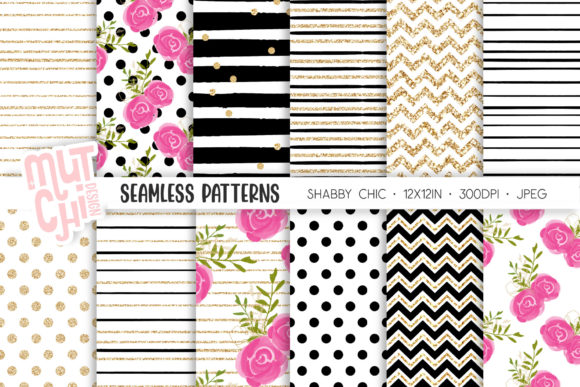
Shabby Chic Seamless Patterns in the Modern Creative Process
In the toolbox of today’s digital creator, certain assets act not merely as decorative elements, but as foundational components for building visual consistency and identity. Shabby Chic seamless patterns are one such resource. They represent a specific aesthetic—one of vintage charm, distressed textures, and soft, romantic palettes—but their true value is unlocked when viewed through a lens of workflow and practical implementation. Whether you are designing a website, crafting social media graphics, producing digital publications, or developing physical products, understanding how to integrate these patterns into your process from start to finish can elevate your work’s quality and coherence.
The Role of Seamless Patterns in a Structured Workflow
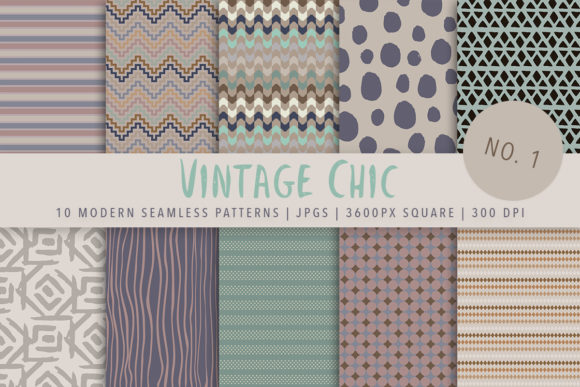
A seamless pattern, by its technical definition, is an image that can be tiled infinitely without visible seams or boundaries. This makes it an incredibly efficient asset for covering large areas—backgrounds, fabrics, wrapping paper, or digital canvases—with a consistent visual texture. The Shabby Chic style brings a particular mood: worn florals, faded stripes, subtle damasks, and gentle color washes that evoke a sense of comfort, history, and understated elegance. For professionals and hobbyists, these patterns are rarely the final goal themselves, but rather a key ingredient used within a larger project.
Their integration typically occurs early in the planning phase. When establishing a visual direction for a brand, a blog, or a product line, selecting a core set of Shabby Chic seamless patterns can define the color palette and textural feel. This decision influences subsequent choices, from font selection to photography style. For instance, a marketer launching a boutique organic skincare line might choose a pattern with soft, faded rose motifs. This pattern then becomes a reference point for all other visual assets, ensuring that Instagram posts, the website’s hero section, and even packaging mockups maintain a unified aesthetic. The pattern acts as a visual anchor.
Preparation and Asset Organization
Effective use begins with proper preparation. Before diving into design software, consider the scope of your project. Gather a library of high-quality Shabby Chic seamless patterns that suit your vision. Look for patterns offered in multiple color variations or at high resolutions to ensure flexibility. Organize them digitally in a clearly labeled folder system—perhaps by color family or texture type (floral, geometric, linear). This simple step prevents wasted time searching for assets later and supports efficient iteration.
Compatibility is a crucial factor. These patterns are most commonly used in digital design platforms like Adobe Photoshop, Illustrator, Canva, or Procreate. Ensure the patterns you acquire are in a format suitable for your primary tools (e.g., PNG with transparent backgrounds, or high-resolution JPG). For those applying patterns to physical products via print-on-demand services, verifying the pattern’s resolution and color profile for print is an essential quality control check early in the process.
Integration into Design and Execution
During the active execution phase of a project, Shabby Chic seamless patterns move from being reference assets to active design elements. Their application is often methodical. In website design, a pattern might be applied as a full-screen background behind text, requiring careful attention to contrast and legibility. In graphic design for social media, a pattern could be used as a textured frame for a photograph, or as a subtle overlay to add depth to a minimalist composition.
The seamless nature of these patterns directly contributes to efficiency. Instead of manually creating or extending a texture, designers can apply a single pattern file and scale it to fit any dimension. This guarantees consistency across different media sizes—a banner ad, a square post, a rectangular brochure—without the need for custom adjustments for each format. For entrepreneurs managing their own visual content, this efficiency is invaluable, allowing for rapid production of cohesive marketing materials.
Practical Implementation Tips
To use these patterns smoothly, consider a few hands-on strategies. First, when applying a pattern as a background, often lowering its opacity can prevent it from overwhelming foreground content. A faded, shabby pattern works beautifully as a whisper of texture rather than a bold statement. Second, use clipping masks or layer blending modes in your design software to integrate patterns with other images creatively. For example, a floral Shabby Chic pattern might only appear within the shape of a logo or a specific text element, creating a custom textured effect.
Another tip involves long-term use. If you adopt a Shabby Chic aesthetic for a brand, build a pattern “style guide.” Document the exact patterns, their color codes, and examples of their application. This guide becomes a resource for any future collaborator, freelancer, or team member, ensuring brand consistency expands over time and across different hands. This systematizes the aesthetic, turning a creative choice into a repeatable workflow component.
Interactions with Other Tools and Resources
Shabby Chic seamless patterns do not exist in isolation. Their effectiveness is amplified by how they interact with other elements in your project. Typography choices are paramount. Fonts with a classic, serif style or gentle script often complement these patterns better than harsh, modern sans-serifs. Photography or illustration styles should also align; images with a soft focus, natural lighting, or vintage subject matter will harmonize with the pattern’s mood.
In a business workflow, these patterns might be part of a larger asset library that includes logo variants, icon sets, and custom color swatches. Storing all these together in a cloud service like Google Drive or Dropbox, with clear permissions and access for your team, creates a centralized resource hub. This hub streamlines the design process for every new campaign or product launch, ensuring the Shabby Chic patterns are used correctly and consistently alongside other brand assets.
For content creators and bloggers, patterns can extend beyond digital screens. They might be used to design printable PDFs, such as worksheets or planner inserts, that offer a tactile, aesthetic experience to their audience. Here, the workflow involves moving from digital design software to a print-ready export, considering margins and bleed areas where the seamless pattern will tile.
Workflow Examples Across Professions
Consider a freelance web designer tasked with creating a site for an antique bookstore. After client consultation, the designer selects a primary Shabby Chic seamless pattern featuring weathered book textures and muted gold tones. This pattern is applied to the website’s header and footer backgrounds. It is also used to create custom social media graphics templates in Canva, which the client can later reuse. The pattern’s colors directly inform the CSS color variables for buttons and links, creating a fully integrated visual system. The designer’s process here is holistic: the pattern choice drives multiple implementation steps across different platforms.
An educator creating online course materials might use softer, notebook-style Shabby Chic patterns as borders for presentation slides or as backgrounds for video title screens. This adds a warm, inviting, and less corporate feel to the learning experience, which can aid in student engagement. The workflow involves embedding these pattern assets into PowerPoint or Keynote master slides, ensuring every new slide automatically carries the consistent aesthetic.
Ensuring Quality and Long-Term Value
The initial appeal of a Shabby Chic pattern is often aesthetic, but its long-term value is judged by its durability within your workflow. Quality control matters. Before finalizing any project, review pattern application at different scales and on different devices. Does the background pattern tile perfectly on mobile? Do the colors remain consistent when printed on a matte versus glossy paper? Addressing these questions during the testing phase prevents post-publication issues.
Furthermore, consider the evolution of your projects. If you build a brand around a set of patterns, think about how they might adapt for future campaigns or seasonal variations. Perhaps your core faded floral pattern can be temporarily swapped for a festive, but still shabby, holiday variant for a December promotion. Planning for this adaptability in your asset library—keeping patterns that share a common color base—makes seasonal shifts efficient and maintains brand recognition.
Ultimately, integrating Shabby Chic seamless patterns successfully is about seeing them not as static decorations, but as dynamic workflow tools. Their selection is a strategic decision. Their organization is a step toward efficiency. Their application is a technical skill that impacts consistency. And their management is a practice that preserves quality over time. By embedding this resource thoughtfully into your planning, execution, and review processes, you harness its full potential to create visually harmonious and professionally polished outcomes, whether for personal passion projects or commercial enterprises.