Understanding Animal Skin Seamless Patterns in Modern Digital Design
Textures breathe life into flat surfaces. For designers, illustrators, and hobbyists, the right pattern can transform an ordinary layout into a visually captivating experience. Among the most versatile texture families, animal skin seamless patterns have carved out a permanent niche. They aren’t just about mimicking a leopard’s spots or a snake’s scales. When crafted properly, these repeatable surfaces offer depth, organic rhythm, and a primal connection that geometric shapes often lack. This article explores their core qualities, practical applications, and what to look for before downloading or purchasing a set.
What Defines a Truly Seamless Animal Skin Pattern?
A seamless pattern is engineered to repeat infinitely without visible borders or interruptions. When you tile a snake skin motif across a large canvas, you shouldn't see a grid, a cut, or an awkward jump in scale. Creating this illusion with organic textures is technically demanding. Unlike simple polka dots or stripes, animal hides have irregular splotches, fur direction, and subtle color gradations that must loop perfectly.
Designers achieve this by carefully manipulating edges in specialized software. The left edge must blend into the right, the top into the bottom. For zebra stripes, the pattern’s flow must continue naturally across the tile boundary. For crocodile textures, the plate ridges need to align without a hard seam. A high-quality animal skin seamless pattern hides its geometry completely. You experience only the raw, uninterrupted surface—whether it’s a distressed leather, a sleek reptilian gloss, or the soft rosettes of a jaguar.
Why Designers Rely on Animal Skin Textures
The obvious answer is aesthetic impact. Animal patterns carry cultural weight. They evoke luxury, wildness, exotic locales, or even a retro fashion vibe. But beyond the surface appeal, these patterns solve several practical design challenges.
First, they provide instant visual complexity without requiring extra illustration work. A simple background using a animal skin seamless pattern can make typography pop. Second, they serve as excellent backgrounds for mockups, fabric swatches, and packaging previews. Third, they are highly scalable. A single repeatable tile can fill a billboard, a phone case, or a dress pattern consistently. This versatility makes them fundamental assets in any digital texture library.
Critical Qualities of Professional-Grade Patterns
Not all downloadable patterns are created equal. When evaluating assets, professionals look beyond the preview thumbnail. Color depth, resolution, and file format all matter. A high-resolution raster tile (at least 4000px by 4000px at 300 DPI) ensures the pattern remains crisp on printed products like wallpapers or upholstery. Vector formats, when available, offer infinite scaling without pixelation—ideal for large-format exhibition graphics.
Color variation is another hallmark of quality. A realistic python skin pattern doesn’t just have one brown tone. It has layered iridescence, shadow under each scale, and highlight on the curves. The best patterns include subtle noise, grain, or texture overlays that mimic the hair follicles of cowhide or the porous surface of ostrich leather. These micro-details prevent the “plastic wrap” look that cheapens many free patterns.
Additionally, check for consistent tonal balance across the entire tile. A poorly made repeat may have a darker patch where edges meet, creating an unintended repeating blotch when tiled. This flaw becomes glaringly obvious on large surface applications. A robust animal skin seamless pattern maintains uniform lighting and color temperature from edge to edge.
Textile and Fashion Design
Fashion designers use these patterns directly on digital mockups of garments. By mapping a zebra skin tile onto a dress template, you can instantly judge how the stripe flows around seams, pleats, and curves. The seamless property is crucial here; a visible repeat line would ruin the illusion of a continuous piece of fabric. For sportswear, abstract or recolored animal patterns are trending, and having them seamless allows for quick colorway adjustments in design software.
Interior Decoration and Wall Coverings
Wallpaper murals often require patterns that blend into an endless expanse. A room wrapped in a subtle ostrich quill texture or a scaled python pattern demands flawless tiling. Interior designers also use these patterns for rendering cushions, rugs, and upholstery in 3D visualization software like SketchUp or Blender. The UV mapping will expose any seam immediately, so only true seamless files perform well in these environments.
Branding and Packaging
Luxury brands frequently employ restrained animal textures—embossed crocodile, subtle snakeskin—on product packaging, business cards, or cosmetic containers. A digital animal skin seamless pattern can be used as a spot varnish effect or embossing guide in print production. The repeatable nature ensures that a small artboard can generate a continuous texture across a large box without needing a massive source image.
Web and App Backgrounds
In UI design, low-opacity or monochromatic animal patterns add tactile richness without overwhelming content. A hero section with a soft cowhide background can differentiate a lifestyle blog or boutique site. Because they tile seamlessly with CSS background-repeat, a few kilobytes of optimized texture can enhance endless screen sizes without performance penalties—provided the file is correctly compressed.
Practical Considerations When Choosing a Pattern
Before you integrate an animal skin pattern into your project, weigh a few practical factors. Start with the intended scale. A giraffe pattern that looks balanced on a phone case might look overwhelming on a full sofa. Always test the pattern at the actual output size. Many design applications allow you to adjust the repeat scale, but extreme resizing can expose resolution limitations or warp the natural proportions.
Color flexibility is another consideration. Some pattern sets come with multiple pre-colored variants. Others provide layered files (such as PSDs or AIs) that let you adjust each tone independently. If you’re working under tight brand guidelines, choose a pattern with editable color channels. Changing a neon pink snake texture to a muted sage green can align it perfectly with a corporate palette while preserving the intricate scale detail.
Licensing also matters. Standard royalty-free licenses might restrict use on physical merchandise for resale. Extended licenses are typically required for mass-produced fabric, phone cases, or print-on-demand products. Always check the terms. A beautiful animal skin seamless pattern is useless legally if it can’t appear on your final product without breaking the usage agreement.
Common Types and Their Unique Characteristics
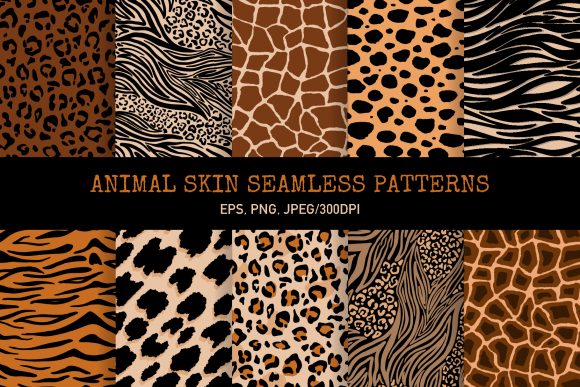
- Leopard and Cheetah Rosettes: Known for distinct spot clusters, these patterns often need careful edge treatment so rosettes don’t get cut awkwardly at the seam. High-end versions include subtle fur direction shifts.
- Zebra Stripes: The elongated, organic wavy lines must loop without creating a sharp “staircase” effect. Good seamless zebra patterns flow continuously and often have tapered ends rather than blunt cuts.
- Snake and Python Scales: Complexity increases with the excess of overlapping scales. The repeat needs to preserve the ridge-and-valley illusion. Look for patterns that maintain a consistent sheen direction across the tile.
- Crocodile and Alligator: These have geometric, plate-like armor. Seams can hide along naturally occurring grooves, but the irregular plate shapes still demand expert edge blending.
- Cowhide and Calf Hair: Organic splotches and hair texture are key. A seamless cow pattern must avoid identical repeating smudges that betray the tile. Randomization filters help break up obvious repetition in larger areas.
- Ostrich and Reptile Leather: These focus on bumpy, pebbled surfaces. A successful seamless tile in this category shines as a background texture, often used in greyscale for embossing effects.
Creating and Customizing Your Own Patterns
While many resources offer ready-made files, understanding the creation process can help you modify and improve existing assets. Begin with a high-resolution photograph of the skin. Use offset filters in Photoshop to push the image edges to the center, exposing the seam. Clone stamp, healing brush, or content-aware fill can blend those exposed seams. Then reset the offset to check for any lingering hard lines. For vector patterns, a similar process applies: create your tile’s bounding box, then manually adjust paths so that elements crossing edges continue on the opposite side.
Adjusting hue, saturation, and levels can transform a reference photo into something entirely new. A natural zebra stripe can become a metallic gold texture for a futuristic concept. A python scale can recolor into a deep emerald for a fantasy setting. The power of a animal skin seamless pattern lies not just in its realism but in its adaptability.
Optimizing Patterns for Web and Performance
When using animal skin patterns online, file size matters. High-resolution JPEG tiles can weigh several megabytes, slowing page loads. Convert to WebP format if possible, or reduce dimensions while maintaining acceptable quality. You can often use a 2000px tile instead of 5000px for a screen resolution with no visible loss. Use CSS background-size to adjust the perceived scale. A animal skin seamless pattern served efficiently can boost a site’s visual appeal without tanking Core Web Vitals scores.
Trends and Evolving Uses
The design world continuously recycles animal motifs, but current trends lean towards abstraction and unexpected color palettes. Pastel leopard spots, neon snake scales, or monochromatic crocodile embosses appear on stationery, social media templates, and device skins. Sustainability narratives also influence choices; textured, animal-inspired patterns can replace material-heavy backgrounds in digital environments, reducing the need for resource-heavy photoshoots.
In motion graphics, animators overlay these patterns on 3D objects to simulate organic surfaces. Because the patterns loop seamlessly, they perform well in cyclic animations where a character’s coat or a creature’s hide needs to move convincingly across its body.
Ultimately, animal skin seamless patterns are far more than decorative extras. They are functional design building blocks that offer creative flexibility, technical performance, and emotional resonance. Whether you’re lining a luxury packaging box, draping a virtual model, or crafting an immersive game environment, the right pattern can save hours of manual texturing while delivering a professional, polished result. Paying attention to seam quality, resolution, color editability, and licensing will ensure that your chosen assets serve your work effectively, project after project.