Seamless St. Patrick’s Day Patterns for Creative Projects
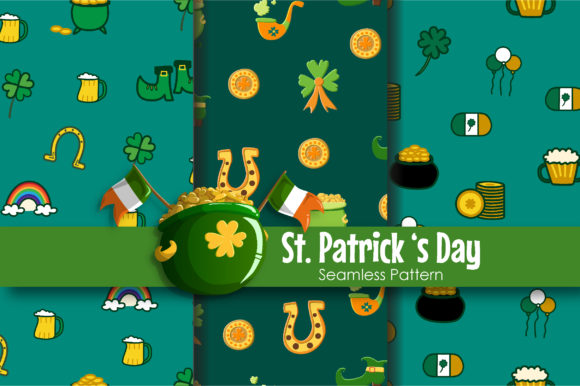
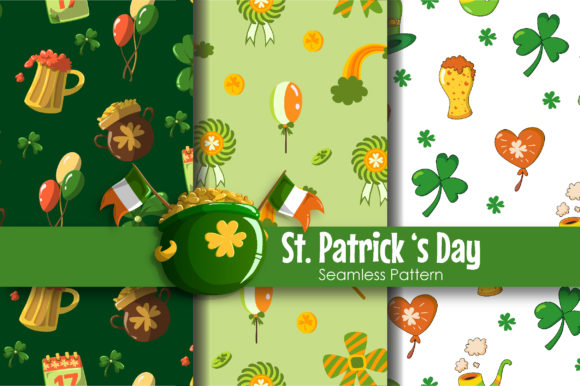
Picture a pattern that repeats endlessly without a visible seam — a continuous flow of shamrocks, Celtic knots, golden coins, and rich emerald greens that can stretch across a website banner, a bolt of fabric, or a printed invitation. That’s exactly what seamless St. Patrick’s Day patterns offer. These digital design assets are built so that when they tile horizontally or vertically, the edges match perfectly, creating the illusion of an uninterrupted surface. Whether you are customizing a product for your online store, preparing classroom materials, or simply crafting a festive card for friends, the right pattern can save time and add professional polish.
Seamless St. Patrick’s Day patterns come in many styles: minimalist line art, watercolor clovers, vintage pub motifs, playful leprechaun scenes, or elegant Celtic spirals. They are typically delivered as high-resolution raster files (JPEG, PNG) or scalable vectors (SVG, EPS, AI) and are instantly usable in software like Canva, Photoshop, Illustrator, or even Microsoft Word. For anyone with a creative task tied to March 17th, these patterns transform an average project into something eye-catching without requiring original illustration skills.
What Makes a Pattern “Seamless” — and Why It Matters
At the heart of any seamless pattern is a cleverly constructed tile. Designers carefully align the edges so that when the tile repeats, motifs don't cut off awkwardly. This technical precision is what separates a professional resource from a simple clip-art collection. For web designers building a themed landing page or apparel decorators printing on a full t-shirt, a visible seam would ruin the effect. The seamless quality ensures the focus stays on the holiday spirit, not on distracting flaws.
In practice, this means you can use the pattern as a background for a large-format banner, a social media header, or fabric yardage without manually retouching edges. It also future-proofs your work — if you later need to expand the canvas or upscale a product, the pattern simply repeats to fill the new space. For a beginner, this removes technical barriers; for a seasoned pro, it accelerates workflow and guarantees consistency across multiple projects.
Why Different Audiences Turn to These Patterns
The same set of seamless St. Patrick's Day patterns can serve completely different goals depending on who holds the mouse. A freelance marketer launching a holiday email series wants a quick, attractive header that feels authentic. A teacher preparing a cut-and-paste activity needs something bright and instantly recognizable for young learners. An entrepreneur selling personalized mugs on Etsy must meet customer expectations for originality and quality while keeping production simple. Understanding these varied needs reveals just how flexible a high-quality pattern set can be.
Bloggers and Content Creators – Building Holiday Atmosphere
For a lifestyle blogger or social media influencer, St. Patrick’s Day offers a chance to refresh visual branding with a seasonal touch. A seamless pattern used as a blog post feature image background or as a repeating texture on Instagram Stories creates cohesion without overloading the feed. Speed matters here: you often need to publish on a tight content calendar. With a ready-made seamless pattern, you can drop it into a template, adjust opacity, and have a post live in minutes. The priority is ease of use and visual versatility — patterns that work equally well behind text or as a subtle overlay.
Small Business Owners and Etsy Sellers – Merchandise That Stands Out
If you run a print-on-demand shop or craft physical products like coasters, mugs, or tote bags, seamless patterns directly impact your bottom line. Customers browsing for St. Patrick’s Day gifts are drawn to designs that look professional and repeat perfectly across the product surface. A poorly tiled pattern leads to returns and dissatisfied reviews. Here, quality and commercial licensing become essential. You need high-resolution files (at least 300 DPI) and explicit permission for commercial use. Additionally, designs with broad appeal — think subtle shamrock repeats rather than cartoonish leprechauns — often sell better across a wider demographic. Sellers evaluate a pattern set not just on initial price but on its potential to generate repeat sales and become a seasonal staple in their catalog.
Educators and Event Planners – Quick, Festive Resources
Teachers planning March lesson plans and party planners coordinating community events share a need for resources that are both cheap (often self-funded) and highly adaptable. A seamless pattern can become a worksheet border, a bulletin board background, a printable banner, or even a placeholder in a newsletter. The focus is on cost-effectiveness and print-friendliness. Patterns that consume too much ink due to overly dark backgrounds or complex gradients may be less practical. Simple, crisp patterns in both full-color and black-and-white line versions give educators more flexibility. For event planners, the ability to scale a pattern across large-format print materials like tablecloths or step-and-repeat backdrops is a huge advantage — making a single purchase stretch across an entire venue.
Hobbyists and DIY Enthusiasts – Crafts Without the Stress
For someone making St. Patrick’s Day cards, scrapbook pages, or home decorations, joy comes from the making, not from wrestling with software. Seamless patterns lower the barrier to entry: you can print them directly onto cardstock, use them with a cutting machine, or layer them in a digital scrapbook app. Clarity of instruction matters — a download that includes a small-scale preview alongside the full tile helps crafters visualize the result. Many hobbyists also appreciate patterns that theme well with other holidays or seasons, so they can reuse the same soft green plaid or gold foil accent for Easter or spring projects, extending the long-term usefulness of their purchase.
Priorities That Shape Your Choice
When evaluating seamless St. Patrick’s Day patterns, different users weigh factors like cost, quality, and flexibility in very personal ways. Recognizing your own priorities stops you from overpaying for features you won't use or, worse, picking a set that fails when you need it most.
- File formats: Beginners often prefer ready-to-use PNGs or JPEGs. Advanced designers want editable vector files (AI, EPS, SVG) to change colors or scale elements without losing sharpness.
- Resolution and size: Print projects demand 300 DPI; digital screens can get by with 72 DPI. A versatile set provides both or allows vector output to any size.
- Commercial versus personal use: A blogger using the pattern for a free wallpaper may not need a commercial license, but a seller creating downloadable printables definitely does. Always check the license terms before buying.
- Design variety: A pack with 10 subtly different green ginghams may be less valuable than one with a cohesive collection of leprechaun motifs, Celtic borders, and abstract clover repeats that work as a system.
- Ease of recoloring: Patterns that come with separated layers or included color swatches let you quickly adapt the design to your brand palette — crucial for businesses maintaining a consistent look.
- Included tutorials: For those less confident in design tools, a quick-start guide or links to video walkthroughs dramatically reduce frustration and expand what you can create.
How to Match a Pattern Set to Your Project Goals
Before downloading, ask yourself a few practical questions. These help filter out mismatched resources and pinpoint the seamless St. Patrick’s Day patterns that will truly serve your needs.
What’s the primary surface? If it’s a digital screen, any pattern with enough resolution works. If it’s a physical product like a dress or a notebook cover, you need seamless tiling that holds up at large sizes and a color profile suited to printing (CMYK, not just RGB).
What’s your skill level? If you’re comfortable in Adobe Illustrator, you can start with a basic vector pattern and modify it extensively. If you're new to design, look for patterns that already have the right color, scale, and mood for your final use — you’ll spend less time learning and more time doing.
How many distinct applications will you demand? A freelancer with multiple clients might need a huge bundle covering many styles, while a parent helping with a school party needs just one or two cheerful, easy-to-print sheets. Overbuying can feel wasteful; underbuying can stall a project. Match the scope of the pattern set to the scope of your tasks.
Practical Examples Across Skill Levels
Imagine three people approaching St. Patrick’s Day with the same pattern set but entirely different results.
Beginner: Maya wants to make cute gift tags for her coworkers. She downloads a seamless pattern PNG, inserts it into a Word document, and uses it as a background behind text. She prints them on cardstock, punches a hole, and ties a ribbon. The seamless repeat means she didn’t have to worry about the pattern cutting off at the page edge — it just works.
Intermediate creator: Kevin runs a small sticker shop. He buys a commercial-use vector pattern, opens it in Illustrator, tweaks the green hue to match his existing pastel rainbow collection, and scales down the repeat to create a tight, almost textured shamrock design for die-cut stickers. The investment pays off because he can reuse the adapted pattern in future spring releases.
Professional designer: Sara is hired to brand a city’s St. Patrick’s Day parade. She uses a high-end seamless Celtic knot pattern as the foundation for a full visual identity — banners, bus shelter ads, staff t-shirts, and social assets. She needs the pattern in vector form to scale without loss, in layered files to selectively hide parts for different layouts, and with an extended commercial license that covers widespread public display. Her evaluation criteria are far stricter, but the right pattern becomes the rallying visual element across the entire campaign.
Long-Term Value: Beyond a Single Holiday
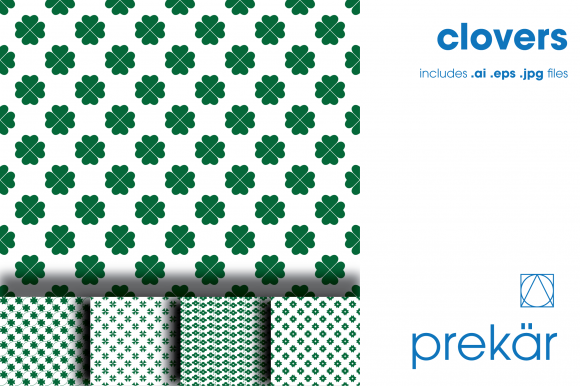
Smart creators look beyond March 17th. Many seamless St. Patrick’s Day patterns incorporate motifs — four-leaf clovers, gold coins, rich greens — that translate beautifully into general good-luck themes, nature-inspired branding, or even Irish cultural content anytime. An educator who grabs a clover pattern for a March bulletin board might reuse it in May for a unit on botany or plant life cycles. A stationery designer can turn a subtle gold stripe and shamrock pattern into a year-round "lucky" card line by simply swapping the holiday greeting.
This extended usefulness often justifies a slightly higher upfront cost or the extra time spent learning how to edit vectors. When you consider the pattern as an asset rather than a one-off decoration, you start to value flexibility, editability, and timelessness over fleeting trendiness. Seamless St. Patrick’s Day patterns, chosen carefully, become a reusable building block in your creative toolkit — not just a seasonal gimmick.
The way you approach these patterns says a lot about your workflow and ambitions. Whether you’re a freelancer needing a polished marketing backdrop, a teacher seeking an affordable classroom refresh, or a business owner stocking a seasonal product line, the right seamless pattern meets you where you are. It sidesteps the need for advanced art skills while delivering professional-grade repetition that honors both the craft and the occasion.