Watercolor Boho Seamless Patterns in Modern Design
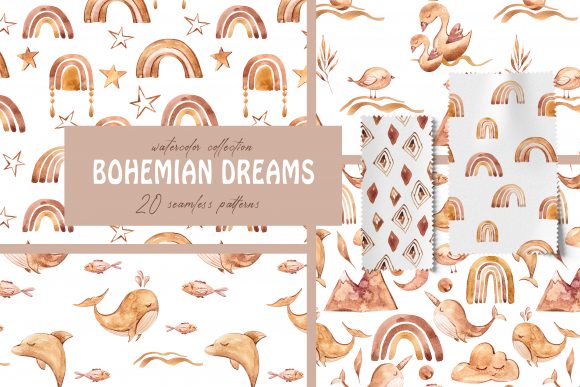
Imagine brushstrokes that flow like a gentle stream, earthy pigments bleeding softly into one another, and motifs drawn from nature arranged in ways that feel both free-spirited and intentional. That is the essence of watercolor boho seamless patterns. These digital assets combine the loose, organic feel of watercolor painting with the rhythmic repetition of bohemian-inspired design elements—think feathers, arrows, florals, mandalas, geometric tiles, and abstract shapes—all engineered to tile perfectly without visible seams. They bring a handmade warmth to surfaces that might otherwise feel sterile or overly manufactured.
What makes them distinct is the tension between control and spontaneity. The seamless tiling ensures they work across infinite surfaces, yet the watercolor medium injects unpredictability—a wash that dried slightly unevenly, a pigment that granulated in fascinating ways, a petal edge that softened beyond a crisp line. This combination appeals because it mirrors how many of us want our creative work to feel: polished enough to trust, but human enough to connect.
Who Benefits From These Patterns and Why
The short answer is anyone who wants to add texture, depth, and a relaxed aesthetic to a project. But the longer, more interesting answer depends on what you are trying to accomplish. A surface pattern designer evaluating a commercial license cares about very different things than a small business owner updating product packaging, and both differ from a hobbyist scrapbooker or a blogger refreshing a website background.
For creative professionals and freelancers, these patterns often become building blocks in client work. A graphic designer might use them as background layers in branding projects, wedding invitation suites, or social media templates. Here, priorities shift toward resolution, file format flexibility, and the terms of the license. A designer needs to know whether they can modify the colors, extract individual motifs, or use the pattern across multiple client projects without recurring fees. The watercolor quality matters too—lower-resolution scans or poorly digitized artwork will show banding or pixelation when scaled, which undermines professional delivery.
Small business owners and product creators look at these patterns through a different lens. Someone selling print-on-demand apparel, stationery, or home decor items needs assets that reproduce reliably across different substrates. A pattern that looks luminous on screen might print muddy on uncoated paper or lose detail on fabric. Business owners also think about market differentiation. The boho aesthetic has been popular for years, which means standing out requires finding patterns with distinctive color palettes—perhaps muted terracotta and sage instead of the expected turquoise and coral—or compositions that feel less generic and more thoughtfully composed.
Educators and Content Creators
Teachers, course creators, and bloggers often need visual assets that set a mood without distracting from the message. Watercolor boho seamless patterns work beautifully as slide backgrounds, worksheet borders, or blog post headers because they add personality without overwhelming text. For this group, ease of use ranks high. They may not own advanced design software, so patterns that import easily into Canva, Google Slides, or Keynote save time and frustration. File formats like PNG with transparent backgrounds or readily tileable JPEGs become practical necessities rather than technical footnotes.
Marketers and social media managers face a constant demand for fresh visuals. A cohesive set of patterns can anchor a brand's visual identity across Instagram posts, Pinterest pins, and email newsletters. The seamless nature means a single pattern can stretch to fit any canvas size or aspect ratio without awkward cropping. When evaluating patterns, marketers often prioritize versatility—does the set include coordinating designs that work at different scales, and can they be recolored to match seasonal campaigns or brand guidelines?
How Beginners and Hobbyists Approach These Patterns
Not everyone who searches for watercolor boho seamless patterns is a professional. Many are beginners exploring digital art for the first time, or hobbyists making handmade cards, journal spreads, or DIY party decorations. For this audience, affordability and immediate usability often outweigh advanced features. They want files that look beautiful right out of the folder, without needing to learn Photoshop adjustment layers or vector tracing.
Beginners often underestimate the importance of seamlessness until they try printing a pattern and discover jarring breaks at the edges. Truly seamless patterns eliminate this problem, but the quality varies widely. A helpful tip for newcomers: zoom in on the preview image and mentally trace where the repeat should connect. If elements abruptly cut off or shift in tone, the tiling may not be clean. Reputable pattern creators usually provide detailed previews or even small sample tiles to verify quality before purchase.
Hobbyists also tend to favor patterns with a lighter, more open composition. Dense, heavily layered designs can feel chaotic on a handmade greeting card or a scrapbook page where other elements need breathing room. Patterns with generous negative space or a scattered, airy arrangement often suit these personal projects better.
Evaluating Quality and Making Smart Choices
Regardless of whether you are a seasoned creative director or a weekend crafter, certain indicators separate exceptional watercolor boho patterns from mediocre ones. Color fidelity tops the list. True watercolor artwork exhibits subtle granulation, bloom effects, and translucent layering. Digitally mimicked watercolor—created entirely in software rather than scanned from actual paintings—can sometimes look flat or overly uniform. Neither approach is inherently wrong, but knowing the difference helps set realistic expectations for how the pattern will behave under different lighting conditions or print processes.
Resolution matters enormously for print applications. A pattern that looks crisp at 72 DPI on a screen may turn soft and disappointing when printed at 300 DPI on a fabric banner or product label. Checking the pixel dimensions and intended use cases before downloading or purchasing prevents wasted time and materials. Many pattern marketplaces now include clear specifications about recommended print sizes and DPI thresholds.
Then there is the question of editing flexibility. Some designers provide patterns only as flattened JPEG files, which limits what you can change. Others offer layered PSD or AI files that let you recolor individual elements, adjust the background, or rearrange motifs. If you anticipate needing to adapt the artwork to different palettes or applications, the availability of editable source files may be the deciding factor in your choice.
- Check the license terms carefully. Personal use, commercial use, and extended commercial use often carry different permissions and restrictions. Using a personal-use-only pattern on products you sell can create legal and ethical issues.
- Test a sample if possible. Some platforms offer free single patterns or trial downloads that let you verify print quality and software compatibility before investing in a larger bundle.
- Consider the emotional tone. Bohemian design ranges from moody and dramatic to light and whimsical. Choose patterns that align with the feeling your project needs to convey rather than settling for whatever is trendy.
Practical Applications Across Different Projects
The range of what these patterns can do extends far beyond the obvious. A wedding stationery designer might use a delicate watercolor floral boho pattern as the envelope liner for invitation suites, creating an immediate tactile impression before the recipient even reads the text. The same designer might adapt a bolder geometric variation for menus and signage at the reception, establishing visual continuity across every printed piece.
An independent publisher producing a poetry collection or a self-help journal might wrap the book cover in a watercolor boho pattern that evokes the interior mood—soft, introspective, and slightly unconventional. Because seamless patterns can wrap around spines and bleed to the edges without interruption, they solve layout challenges that static artwork creates. The result looks intentional and professionally finished.
For web and app designers, subtle watercolor textures used as section dividers or hero image backgrounds can soften an otherwise corporate interface. A wellness app, for instance, might use barely-there watercolor washes behind daily affirmation screens to reinforce warmth and approachability without competing with text readability. In these contexts, the seamless tiling allows the pattern to adapt fluidly to different screen sizes and orientations.
Event planners and decorators increasingly use digital patterns to create custom backdrops, table runners, and photo booth walls. Printed on fabric or large-format vinyl, a well-chosen watercolor boho seamless pattern transforms a blank space into an immersive environment. The investment is modest compared to custom-painted murals, yet the visual impact can be just as memorable.
Does This Aesthetic Match Your Project?
Not every project benefits from watercolor boho styling. If your brand identity leans minimalist, corporate, or highly technical, these patterns may introduce a visual softness that works against your message. On the other hand, if your work touches on themes of creativity, nature, mindfulness, craftsmanship, or personal expression, the fit can feel almost effortless. The key is intentionality—using the pattern because it serves the project, not simply because it is available and attractive.
Think about longevity too. Boho design has shown remarkable staying power, but specific color trends shift. Earthy neutrals, dusty pastels, and muted jewel tones tend to age more gracefully than hyper-saturated or neon variations. If you are investing in patterns for a brand or product line you hope to sustain for years, choosing palettes with some timelessness built in reduces the need for frequent visual reboots.
Ultimately, watercolor boho seamless patterns offer something rare in digital design assets: the feeling that a human hand made them. In a media landscape saturated with perfectly crisp vectors and algorithmically generated imagery, that quality resonates. Whether you are crafting a single heartfelt birthday card or building a cohesive product collection, these patterns bring texture, warmth, and a gentle reminder that imperfection can be beautiful.