Why Leopard Print Seamless Patterns Are Redefining Modern Design Across Every Medium
Some design elements fade with time. Others roar louder with each passing decade. Leopard print belongs firmly in the second camp. Yet what many people don't realize is how dramatically the leopard print seamless patterns of today differ from the static, obvious repeats of the past. These aren't merely scanned animal spots dropped onto a canvas. They represent a fusion of organic randomness and mathematical precision, engineered to flow without visible edges across anything they touch. Whether you're wrapping a product, upholstering a statement chair, or building a digital brand identity, understanding what makes these patterns work—and when they don't—can save you from costly mistakes and unlock creative possibilities you hadn't considered.
What Actually Defines a Leopard Print Seamless Pattern
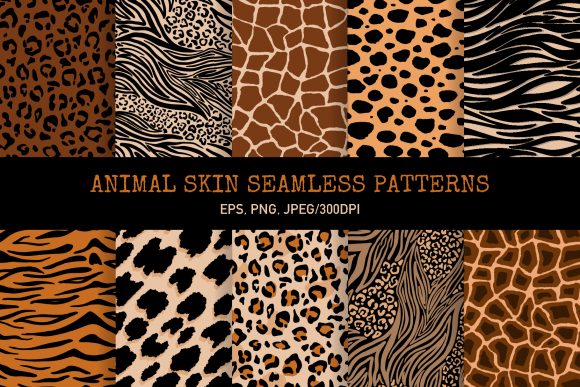
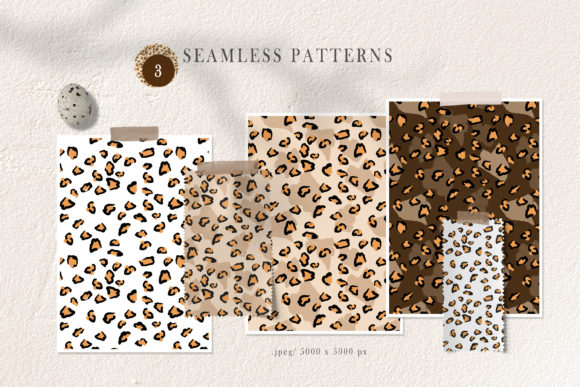
At its core, a seamless pattern is an image that can be tiled infinitely without showing where one repetition ends and another begins. When applied to leopard print, the challenge intensifies. Natural leopard spots have an irregular, scattered rhythm. Translating that organic chaos into a repeatable grid without creating obvious "seams" or awkward clustering requires careful craftsmanship. A high-quality leopard print seamless pattern achieves exactly this: the rosettes and speckles distribute themselves in a way that feels wild and unforced, even though they're technically repeating across a manufactured surface.
Key characteristics that separate premium patterns from amateur efforts include:
- Edge blending integrity: The pattern's borders dissolve into themselves so cleanly that even zoomed-in inspection reveals no harsh lines or sudden jumps in density.
- Scale variability: Natural leopard coats don't feature identical spot sizes. Quality patterns mimic this by varying rosette dimensions, some spots appearing clustered while others stand alone.
- Color depth and nuance: Beyond the classic tan, black, and cream, you'll find versions with charcoal bases, warm amber undertones, or even monochromatic renditions that read as texture rather than literal animal print.
- Density control: Some applications demand an airy, negative-space-rich layout. Others call for dense, high-impact coverage. The best collections offer both.
The "seamless" aspect isn't merely aesthetic. It's functional. When you're ordering fabric by the yard, printing wallpaper panels, or wrapping a curved product surface, any visible repeat grid telegraphs artificiality. The pattern stops feeling like leopard print and starts feeling like a cheap imitation. That distinction matters enormously, whether your audience is a retail customer or a design client scrutinizing every detail.
Tracing the Journey From Physical Fur to Digital Versatility
Leopard print has existed in human material culture for millennia, but its translation into leopard print seamless patterns represents a distinctly modern achievement. Before digital tools became widespread, textile designers manually painted repeats, often struggling to hide the "block print" effect that emerged when motifs hit edge boundaries. Screen printing imposed further limitations: each color required a separate screen, which meant simplified spot structures and fewer tonal gradients.
Today's digital pattern design operates on an entirely different plane. Artists work at resolutions that capture individual fur texture, layering semi-transparent rosettes over mottled backgrounds. Some incorporate subtle noise or grain that mimics the slight irregularities of natural hide. The result is a file you can upload to a print-on-demand platform, send to a textile mill, or use as a website background—and in every context, the pattern holds its integrity.
What's particularly interesting is how cultural associations have shifted alongside technical capability. Where leopard print once signified very specific subcultures—punk, glam rock, certain eras of haute couture—the seamless digital versions have democratized its use. A minimalist furniture brand might use an ultra-subtle tonal leopard pattern as a texture on their website. A luxury packaging designer might specify gold-on-cream leopard print for a candle vessel. Neither application screams "costume." Both leverage the pattern's visual movement without triggering outdated stereotypes.
Where Leopard Print Seamless Patterns Deliver Exceptional Value
The range of practical applications has expanded so dramatically that almost any surface-based industry can find a legitimate use case. Let's walk through the most impactful arenas where these patterns are currently making waves.
Textile Design and Fashion Production
This remains the most obvious territory, but the way designers deploy leopard print seamless patterns has evolved. Rather than all-over bodycon dresses, you'll see engineered placements on collar facings, pocket linings, or sleeve cuffs—small doses that reward close inspection. Swimwear brands are particularly active here; the pattern's organic curves complement body contours naturally, and the seamless quality ensures that stretched fabric across a curved bust or hip doesn't distort into visible grid lines. Activewear labels have also embraced the motif, often recoloring it in unexpected palettes like dusty mauve or deep teal to distance themselves from traditional animal-print connotations.
Home Décor and Interior Surfaces
Wallpaper is experiencing a renaissance, and leopard print patterns are surprisingly versatile within this space. A powder room wrapped in a muted, sepia-toned leopard pattern creates intimacy without aggression. Upholstery fabrics benefit similarly: a single leopard-print armchair in an otherwise neutral room functions as an anchor piece, and the seamless quality means the pattern flows around curved arms and seat cushions without jarring interruptions. Even bedding and curtains have entered the conversation, often in blown-up scales that read more as abstract organic forms than literal animal markings.
Product Packaging and Branding
Perhaps the fastest-growing application lies in packaging. Small-batch cosmetics brands, candle makers, and boutique spirit labels have discovered that leopard print conveys a specific kind of understated luxury when executed correctly. Imagine a matte black box with glossy tonal black leopard spots—the pattern registers only when light catches the surface. Or a perfume bottle wrapped in a translucent film printed with a scaled-down leopard pattern, revealing hints of the liquid inside. The seamless nature of the design is critical here, because any visible repeat would destroy the illusion of premium craftsmanship.
Digital Media and Web Design
Website backgrounds, social media templates, NFT projects, and app interfaces have all incorporated leopard patterns in recent years. The key here is restraint. A full-screen leopard background overwhelms quickly. But a strategically placed section divider, a subtle hover-state texture, or an email header with leopard-inspired organic shapes? Those applications feel contemporary and intentional. Digital designers particularly value leopard print seamless patterns because they can be set to tile infinitely at any viewport size without the developer worrying about edge detection or image size constraints.
Who Stands to Benefit Most From These Designs
The audience for leopard print patterns is broader than many assume. Specific groups find particularly strong alignment with what these designs offer.
Independent fashion designers and small-run producers benefit enormously. Without the budget for custom textile development or hand-painted fabrics, they can license or purchase seamless pattern files, send them to digital fabric printers, and produce garments that look far more expensive than their production cost suggests. The ability to recolor the pattern for different drops or seasonal collections multiplies this advantage.
Interior decorators and design firms use leopard print as what they call a "neutral accent"—a pattern that paradoxically functions as a grounding element because it contains black, brown, and cream tones found throughout most natural design palettes. When specifying custom wallcoverings or upholstery for clients, having access to a range of leopard print scales and colorways provides creative optionality that off-the-shelf products rarely match.
Product developers and packaging designers working in beauty, wellness, and lifestyle categories find that leopard print communicates primal authenticity without needing words. In a marketplace saturated with minimalist white packaging, a strategically leopard-printed element instantly differentiates a product on crowded shelves or thumbnail grids.
Crafters and small business owners who sell through platforms like Etsy use leopard print seamless patterns for everything from printable gift wrap to tumbler wraps to fabric by the yard. The low barrier to entry—purchase a digital file, upload to a print provider—makes it possible to offer on-trend products without holding inventory.
Strengths That Make Leopard Print Seamless Patterns Endure
Understanding why this motif persists helps inform smarter usage decisions. The strengths are tangible and measurable rather than purely subjective.
Visual movement without geometry. Unlike stripes or grids that create strict directional lines, leopard spots scatter organically. This means the pattern doesn't fight with curved surfaces, gathered fabric, or irregular product shapes. It conforms rather than contrasts, which is why it works on everything from throw pillows to phone cases.
Cultural legibility. Nearly everyone on the planet recognizes leopard print. This instant readability means designers don't need to educate audiences or explain visual metaphors. The pattern does its communication work in milliseconds, leaving designers free to focus on context, scale, and color.
Recolorability. Because leopard print relies on contrast between spots and background rather than specific hues, it accepts nearly any colorway. Designers have produced versions in everything from neon pink-on-black to white-on-white tonal renderings. The fundamental structure holds regardless of palette, which makes it one of the most adaptable patterns available.
Timelessness with cyclical freshness. Leopard print never fully disappears from fashion or design. It recedes, then resurges, but always maintains a baseline presence. Investing in quality seamless leopard pattern resources means you're acquiring an asset with decades of probable relevance rather than a seasonal trend that expires in months.
Candid Considerations and Practical Limitations
No design resource suits every situation. A clear-eyed assessment of where leopard print seamless patterns fall short will guide smarter implementation.
Oversaturation risks. When a motif becomes ubiquitous, differentiation suffers. In certain product categories—phone accessories, fast fashion, budget home décor—leopard print has cycled through so many iterations that audiences may perceive it as generic unless the application demonstrates clear intentionality. Combat this by modifying scale, color, or application context rather than using the pattern in its most conventional form.
Cultural sensitivity considerations. While leopard print in Western markets primarily reads as a fashion or design choice, some cultural contexts associate animal prints with specific ceremonial or status implications. Brands operating globally should research regional perceptions before deploying leopard-heavy visual identities in unfamiliar markets.
Resolution and production alignment. A pattern that looks crisp on screen may blur or pixelate when printed at certain scales. Always verify that the file resolution matches the intended output method. Rotogravure printing, digital fabric printing, and screen printing each impose different minimum detail thresholds, and leopard spots with fine internal texture may not survive processes designed for bolder graphic elements.
Pattern matching in physical production. Even with a mathematically seamless file, physical product assembly introduces variables. Wallpaper installers must align panels, upholsterers must match cuts, and garment manufacturers must consider pattern placement at seam lines. A truly seamless digital pattern helps enormously, but it doesn't eliminate the skilled labor required for precise physical alignment.
Evaluating and Selecting the Right Pattern for Your Project
Not all leopard print seamless patterns are created equal. When sourcing files—whether purchasing from stock platforms, licensing from independent artists, or commissioning custom designs—certain evaluation criteria separate the usable from the problematic.
Begin by examining the pattern at multiple zoom levels. At actual size, does the spot distribution feel natural, or does your eye detect rhythmic clustering that betrays the underlying grid? Zoom out to see how the pattern behaves when repeated across a large virtual area. Some patterns reveal faint diagonal banding or checkerboard effects at distance that remain invisible up close but become glaring in real-world applications like wallpaper or wide-format fabric printing.
Request or generate a tiled preview showing at least four full repetitions in each direction. This reveals edge-handling quality more honestly than a single tile in isolation. Pay attention to the transitions: do spots abruptly cut off at tile boundaries only to resume identically on the opposite side, or does the designer's edge treatment create genuinely continuous organic flow?
Consider the file format and layer structure. Vector patterns (typically .ai or .eps files) offer infinite scalability but may lack the textural nuance of high-resolution raster files. Many professional-grade patterns ship with both vector base shapes and raster texture overlays, giving you maximum flexibility. Check licensing terms carefully: some patterns allow unlimited physical product creation but restrict digital redistribution, while others impose print-run limits that matter for larger commercial applications.
Test the pattern on your intended substrate before committing to full production. Print a sample yard of fabric or a single wallpaper panel. Wrap a prototype product. Apply the pattern to your website staging environment. The quickest way to discover whether a leopard print works for your specific context is to see it in that context, not to analyze it abstractly on a screen.
Looking Forward: Where Leopard Print Seamless Patterns Are Headed
The pattern's trajectory suggests continued evolution rather than replacement. Several currents are shaping what we'll see in the near term. Generative AI tools now allow designers to create custom leopard variations with parameter-controlled spot density, organic edge softness, and color gradient complexity that hand-crafted methods struggle to match. Some platforms already offer algorithmic pattern generation where users adjust sliders for "ferocity," "scale," and "contrast" to produce unique seamless repeats. Whether these tools supplement or supplant traditional designer-crafted patterns remains an open question, but the increased accessibility will likely push overall quality expectations higher.
Simultaneously, sustainability concerns are driving interest in patterns that maximize fabric yield. Because leopard spots lack directional grain, garments cut from leopard-printed fabric can often be nested more efficiently, reducing textile waste compared to directional patterns that demand specific cutting orientations.
What's clear is that leopard print seamless patterns have transcended their origins as simple animal mimicry. They now occupy a design category of their own, valued for their visual rhythm, adaptability, and the specific kind of organic structure they contribute to whatever surface they grace. Whether you're a designer seeking your next signature motif or a business owner wondering if leopard print aligns with your brand, the pattern rewards careful consideration and deliberate application far more than it ever did casual appropriation.